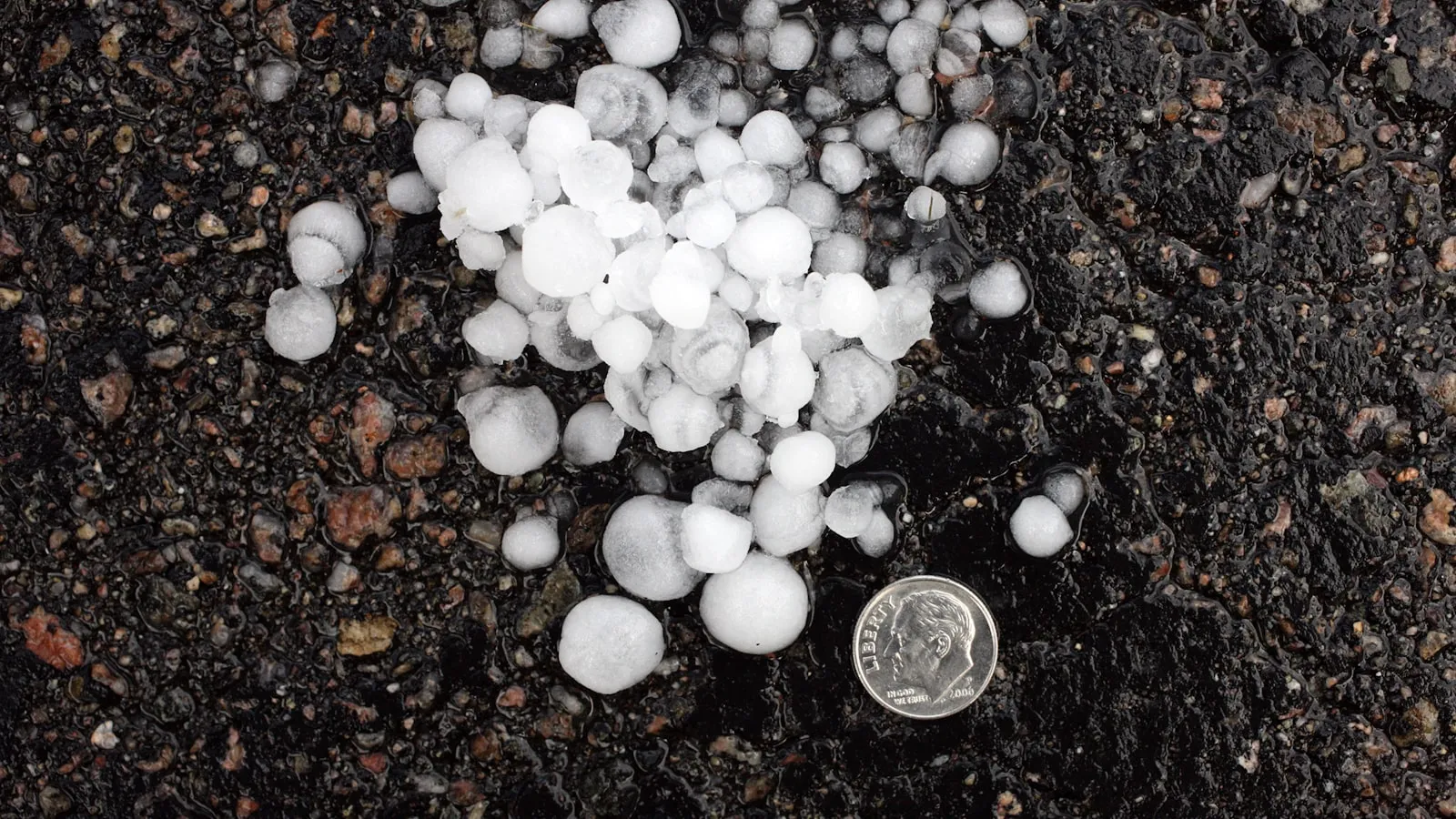
The storm has passed, the dog has come out from under the bed, and now you’re standing in the driveway wondering about your roof. Here’s a checklist you can work through in twenty minutes, from the ground, without doing anything your insurance company — or your spouse — would object to.
First: document the storm itself
1. Photograph hail on the ground. Next to a coin, a tape measure, or your hand. Time-stamped photos of stone size are the cleanest evidence a claim file can have, and hail melts fast.
2. Note the exact date and time. Adjusters verify claims against weather records. Write it down while it’s certain.
The ground-level walk-around
3. Check gutters and downspouts for dents. Aluminum shows hail impacts clearly. Dented gutters don’t prove shingle damage, but they tell you the stones were big enough to matter.
4. Look at window screens and AC fins. Torn screens and flattened air-conditioner fins are classic impact indicators adjusters look for.
5. Scan siding, fences, and deck rails. Fresh strike marks — chipped paint, dents in vinyl, bright wood exposed on fence tops — map the storm’s intensity on surfaces you can see up close.
6. Check downspout splash blocks for granules. A sudden pile of shingle granules after a storm means impacts stripped the protective surface somewhere above.
7. Look up — from a distance. From across the street or with binoculars, look for missing tabs, lifted shingles, or exposed black patches. Don’t climb. Hail-bruised shingles are slippery, and roof falls hurt worse than deductibles.
Inside the house
8. Check top-floor ceilings and closets. Water stains sometimes take days to appear. Recheck after the next rain.
9. Look in the attic with a flashlight. Wet insulation, darkened decking, or daylight where there shouldn’t be any — all worth a photo.
The one that ties it together
10. Get a professional inspection with photo documentation. Functional hail damage — fractured mats, bruises that break the fiberglass — usually isn’t visible from the ground at all. A proper inspection chalk-marks and photographs every strike, slope by slope, producing the evidence file your claim will stand on. Ours are free, and if the damage doesn’t rise to claim level, the report says exactly that.
A word about the knock on your door
After a big storm, out-of-town crews sweep hard-hit neighborhoods. Some are legitimate; many are gone before the warranty ink dries. Colorado law gives you 72 hours to cancel a roofing contract after signing, and prohibits contractors from offering to cover your deductible. The simplest filter: work with a company whose address, license, and references are all local — and who’s willing to put their inspection findings in writing whether or not you hire them.
When there’s a real leak, don’t wait
Active dripping means the checklist can wait: get the roof tarped. Our storm line — (303) 555-0147 — runs 24/7 through hail season, and a same-day tarp routinely saves homeowners thousands in interior damage that a two-day wait would have caused.